

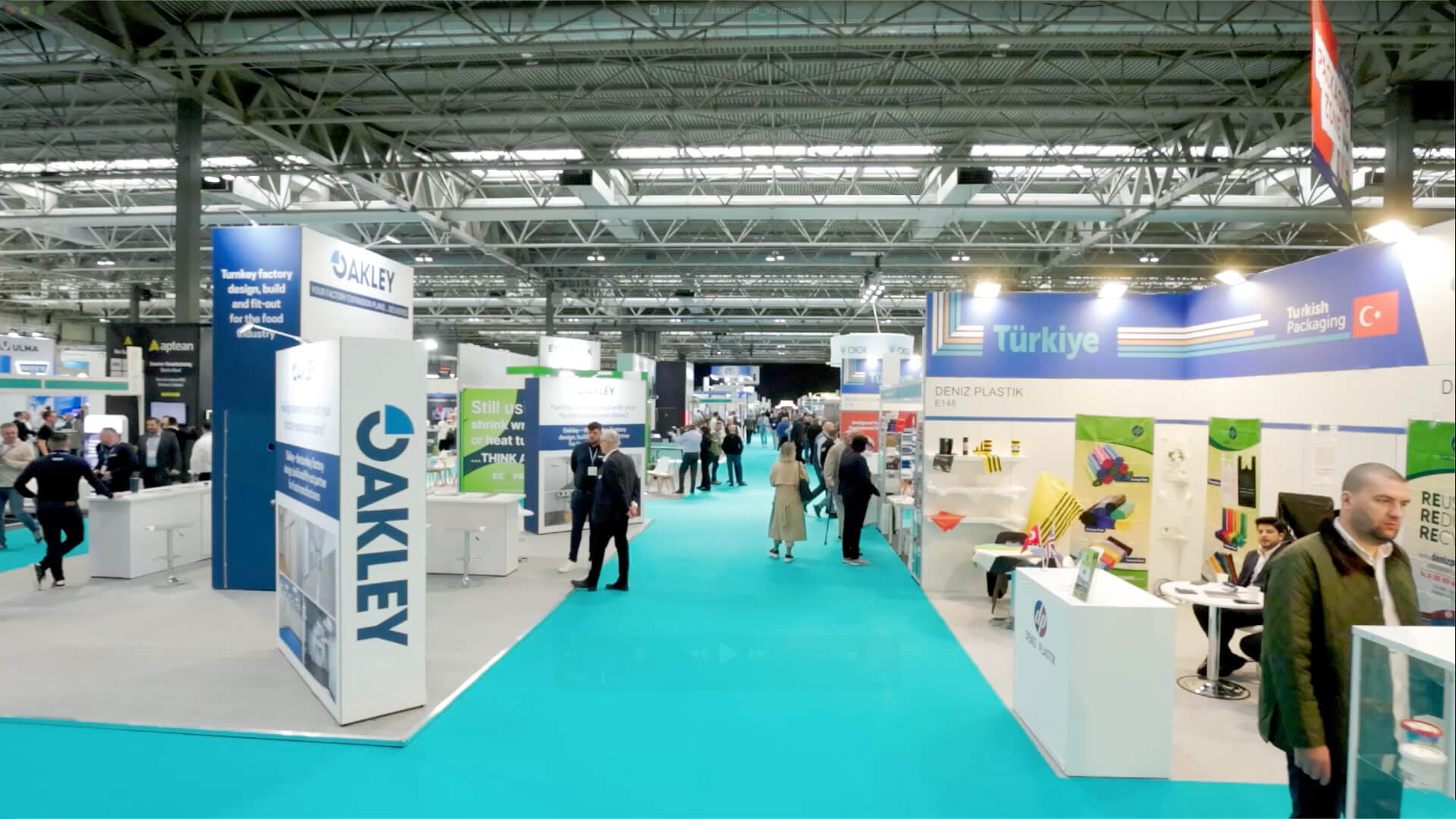

The food manufacturing industry is undergoing a transformation in 2025, driven by innovation, automation and a focus on sustainability. At this year’s Foodex Manufacturing Solutions, two industry leaders – Nigel Adams, Head of Sales at GEA Food Solutions and Adam Hodson, Field Sales Manager from Reiser UK, shared their perspectives on the evolving landscape of food processing and manufacturing.
Automation as a lifeline
One of the most pressing issues facing manufacturers is the availability and cost of labour. As Adam Hodson puts it “Automation is key. Trying to produce the same high-quality products that we're all used to and want. But, making that process less manual and more automated.”
This shift isn’t just about improving efficiency - it’s about ensuring business continuity. With fewer skilled workers available and rising wage pressures, companies are turning to robotics and smart systems to fill the gap. Reiser, for example, has deployed robotics on thermoformers and auto-loading systems to reduce manual handling while maintaining product quality.
According to Food Manufacture, automation is now considered ‘critical to food and drink manufacturing’, especially in the face of labour shortages and rising operational costs. The article notes that automation is helping businesses “improve productivity, reduce waste and enhance food safety”, making it a strategic necessity rather than a luxury.
Sustainability
Sustainability is now a core business priority. Nigel Adams highlighted “What we're seeing in terms of industry trends in 2025 is very much a push towards sustainability, energy efficiency, automation is obviously very key for a lot of our food production houses.”
Manufacturers are under pressure from regulators, retailers and consumers to reduce their environmental impact. This includes cutting emissions, reducing packaging waste and improving energy use across operations.
According to Food Manufacture, companies are adopting waste-to-value strategies, simplified packaging and energy efficient machinery to meet these expectations. Sustainability is no longer a marketing message - it’s a business imperative.
Economic instability
The global economic climate continues to challenge the food sector. From inflation and energy prices to geopolitical disruptions, manufacturers are navigating a volatile environment. Nigel Adams acknowledges the impact: “These are challenging times, the economic instability. There's lots of things going on in the world that has impacts. What we're trying to do is bring our own stability to the market, reassure our customers that we're there for the long term…”
In response, companies like GEA and Reiser are focusing on long-term customer relationships and flexible, full-spectrum solutions that can adapt to shifting market conditions. Food Manufacture has also reported on the rising cost of ingredients and packaging materials, reinforcing the need for greater supply chain visibility and resilience.
The food processing and manufacturing industry in 2025 is defined by its ability to adapt. Labour shortages, sustainability demands and economic uncertainty are not just challenges - they’re catalysts for innovation. As Nigel and Adam demonstrate, the companies that thrive will be those that invest in automation, embrace sustainability and stay closely aligned with their customers’ evolving needs.
To find out more about Foodex Manufacturing Solutions 2027, visit our website here.


