

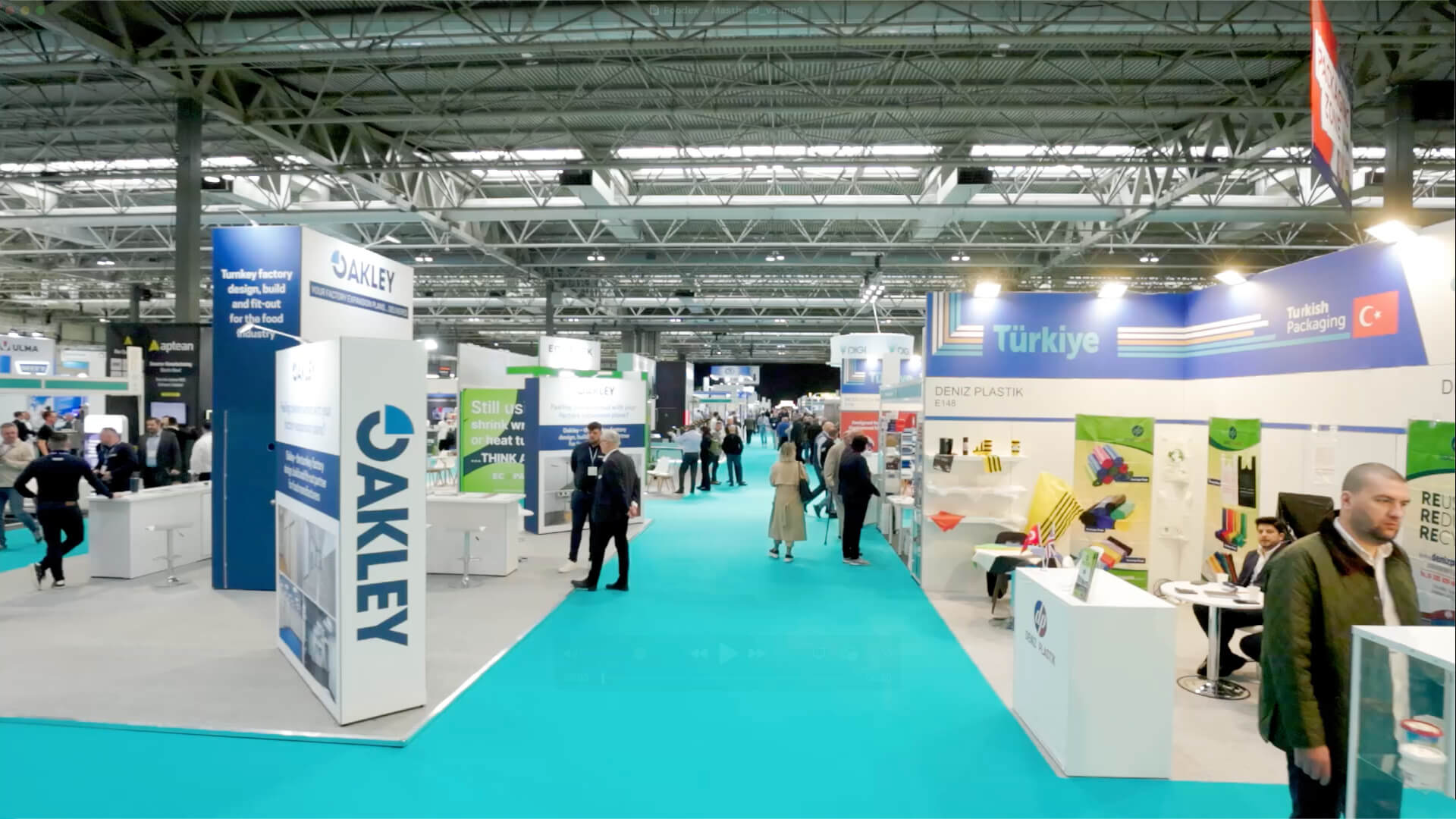

Featured contributors:
- Fran Ball, VP UK Production, Arla Foods
- Nigel Paine, VP Production Planning, Carlsberg Britvic
- Will Gilchrist, Regional Sales Manager, Robotiq
- Adam Hodson, Field Sales Manager, Reiser UK
- Claire Bottle, Chief Executive, UK Warehousing Association
The Automation Revolution is Here
Across Foodex 2025, one message was impossible to ignore: automation is no longer a future ambition. It is a present-day necessity.
Food manufacturers are increasingly facing labour shortages, rising employment costs, supply chain disruption and growing demands for efficiency. As a result, businesses are accelerating their investment in robotics, artificial intelligence and data-driven manufacturing technologies.
Fran Ball, VP UK Production at Arla Foods, believes automation represents a significant opportunity for the sector.
"It's going to change the roles that are in the food manufacturing industry. We'll be looking more at data, we'll be looking more at information and we'll automate out some of the manual handling that we perhaps have today." - Fran Ball, Arla Foods
Labour Challenges are Driving Investment
For many exhibitors, labour availability remains one of the key challenges facing manufacturers.
Will Gilchrist, Regional Sales Manager at Robotiq, highlighted that rising labour costs and difficulties finding suitable workers are among the biggest conversations taking place with customers.
"We've noticed some really key trends in the industry in the cost of labour and the difficulty in sourcing labour." - Will Gilchrist, Robotiq
Similarly, Adam Hodson from Reiser UK explained that customers are increasingly seeking ways to maintain quality while reducing manual processes.
"People want to reduce labour but maintain or improve quality." - Adam Hodson, Reiser UK
Data is Becoming the New Competitive Advantage
For Nigel Paine, VP Production Planning at Carlsberg Britvic UK, the next manufacturing revolution is not simply robotics. It's data.
He sees Supply Chain 4.0 as an opportunity to leverage data analytics to improve efficiency, energy consumption and operational performance.
"Data and analytics in the supply chain, for me, it's the future." - Nigel Paine, Carlsberg Britvic UK
By using real-time monitoring, predictive maintenance and performance analytics, manufacturers can make smarter decisions while boosting productivity.
Automation Beyond the Factory Floor
Automation isn't limited to manufacturing lines.
Claire Bottle, Chief Executive of the UK Warehousing Association, believes warehouses are undergoing the same transformation.
"Labour is becoming more expensive and more scarce, and at the same time some of these technologies are becoming cheaper and more affordable." - Claire Bottle, UK Warehousing Association
The growth of warehouse robotics, cobots and intelligent logistics systems is creating end-to-end efficiencies across food supply chains.
Looking Ahead
The discussions at Foodex 2025 indicate that automation is no longer optional. Manufacturers are embracing robotics, AI and data-led operations not simply to cut costs, but to improve quality, resilience and competitiveness.
Those investing today are positioning themselves for a smarter, more agile future.


